




Buying a used car is a significant financial decision that can be stressful for many people. There are so many factors to take into consideration, and we’ll address a few of these in upcoming posts to help you be a more informed customer.
First up: How do you really know if you’re getting a fair price on a used car?
We’ll walk you through everything you need to know about getting a good price on a used car — from online tools like Kelley Blue Book to negotiation strategies, from understanding fees to spotting red flags in listings.
Short on Time? Here are Five Quick Tips to Get a Fair Price on a Used Car at a Dealership
- Use online tools to get an idea of what the vehicle is going for currently.
- Take into consideration the condition of the specific car you’re looking at.
- When buying from a dealership, keep an eye out for hidden fees that might increase your payment.
- Use an online calculator to see how much you can afford.
- If you’re looking to negotiate a vehicle price, be upfront, polite, and research-based.
How to Know if a Car Price is Good
When you see a used car listed online or on a lot, your first thought is usually: Is this a good deal?
Here are the key ways to figure it out:
1. Compare Across Platforms
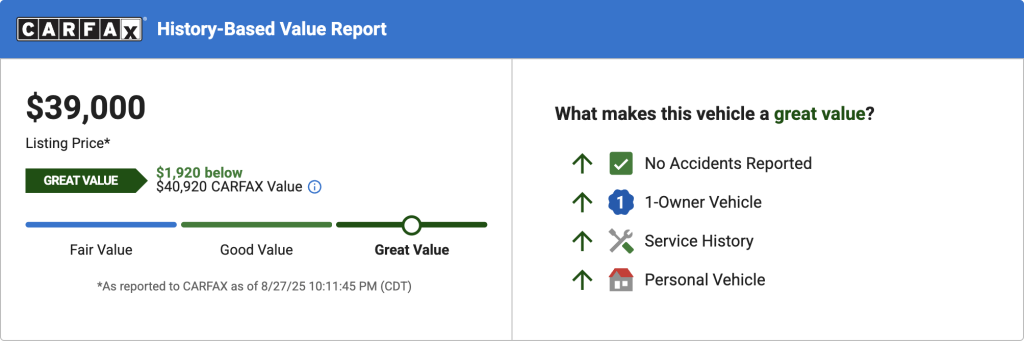
Sites like Carfax, AutoTrader, and Cars.com don’t just list cars — they often tell you if the asking price is below, at, or above market value. These tools pull data from thousands of listings to give you a quick sense of whether the price seems fair.
2. Check with Trusted Valuation Guides
There are websites that provide estimated values for vehicles based on make, model, mileage, and general condition. These resources can help you answer the question: “How much should I pay for a used car?”
These are the two leading guides:
- Kelley Blue Book (KBB): Perhaps the most widely recognized source, KBB provides values for trade-in, private sale, and dealer retail.
- J.D. Power: Known for reliability studies, J.D. Power also offers pricing tools based on real-world transactions.
Each of these tools can help you benchmark a price, but none are perfect. They don’t know if a vehicle has brand-new brakes, a spotless interior, or a history of fender-benders. Use them only as a starting point, not the final word.
3. Understand the Limitations
While online tools are incredibly helpful, they don’t always account for the specific condition of the car you’re looking at. A vehicle with new tires, detailed service records, and one local owner may be worth more than the “average” car listed in the guides. Conversely, one that hasn’t been well cared for might not justify the suggested price.
4. Look Beyond the Sticker
A low sticker price doesn’t always mean a good deal. Some dealerships offset a tempting price by tacking on thousands in hidden fees or inflated add-ons. That’s why it’s critical to consider the out-the-door price, not just the number you see online. More on this below.
The Truth About Add-Ons and Dealer Markups
Unfortunately, many car dealers try to get customers in the door by advertising prices that are much lower than the price customers will end up paying for the vehicle.
Typical addendums customers might see are:
- Window tint
- Theft protection systems
- Exterior paint sealants
- Interior fabric protection
These add-ons often come with markups as high as 1,000%. A product that costs the dealer $100 could be added to your contract for hundreds (or even thousands) more. Dealerships that charge addendums typically add between $2,000 and $3,500 in hidden fees on top of the price advertised to customers.
You can spot red flags in listings & dealer disclaimers by looking out for phrases like:
- “Does not include tint, paint protection, etc.”
- “Market adjustment fee may apply”
- “Price excludes dealer add-ons”
If you see these phrases in vehicle listings, it’s likely the advertised price is much lower than what you will be paying for a used vehicle.

At Burns Chevrolet of Gaffney, you don't have to worry about hidden charges when you're shopping for a used vehicle. We've worked hard to build a reputation for trust and transparency in the Upstate of South Carolina, and we never charge addendums or hidden fees.
Sticker Price vs. Out-the-Door Price
Customers need to be clear on the difference between sticker price and out-the-door price. The sticker price is what you see advertised. The out-the-door price is what you actually pay after fees, add-ons, and taxes.
Here is an example of how this might look at a dealership that charges addendums:
- Sticker price: $19,000
- Add-ons: $2,500
- Taxes & fees: $1,000
- Out-the-door: $22,500
If you had a budget of $20,000 for a used car, that extra $2,500 makes a big difference.
Understanding Fees on Used Cars
Here’s what you need to know about fees:
- Sales tax: Varies by state (South Carolina caps it at $500 for vehicle purchases).
- Tag/Title fee: Covers the cost of registering your car.
- Closing/Doc fee: Charged by most dealerships to handle paperwork.
- Addendums: Optional add-ons that some dealers use to inflate profits.
How Much Should I Pay for a Used Car?
This is the most common question buyers ask, and it isn’t just about the car’s price — it’s about your finances.
The answer depends on:
- Your budget - Experts recommend keeping your car payment at 10–15% of your monthly income.
- The vehicle’s value (based on guides and condition) - refer to the resources mentioned earlier in this post such as Carfax and Kelley Blue Book
We offer a car payment calculator on our website so you can quickly determine how much you can afford to spend on a car based on your income and expenses.
How to Negotiate Price on a Used Car
Negotiation is a typical part of a used vehicle purchase at a dealership, but it doesn’t have to be filled with the tension customers expect.
Here’s how to do it effectively:
- Be honest and upfront with your salesperson about what you’d like to pay.
- Do your research using resources like Cars.com and J.D. Power so your offer is realistic.
- Be kind. Treat the salesperson like you’d treat anyone else — with respect.
- Remember the goal: Both you and the dealer want the same thing — for you to drive away in a car that fits your needs at a fair price.
Why Local Shoppers Trust Burns Chevrolet
Customers come to us from Spartanburg, Greenville, Charlotte, and Shelby because they’re tired of hidden fees and games. They know that at Burns Chevrolet, the advertised price is the real price on all our new and used vehicles.
At Burns Chevrolet of Gaffney, we are committed to being transparent with our customers. You never have to worry about being duped into buying a car here because we never charge addendums or hidden fees.
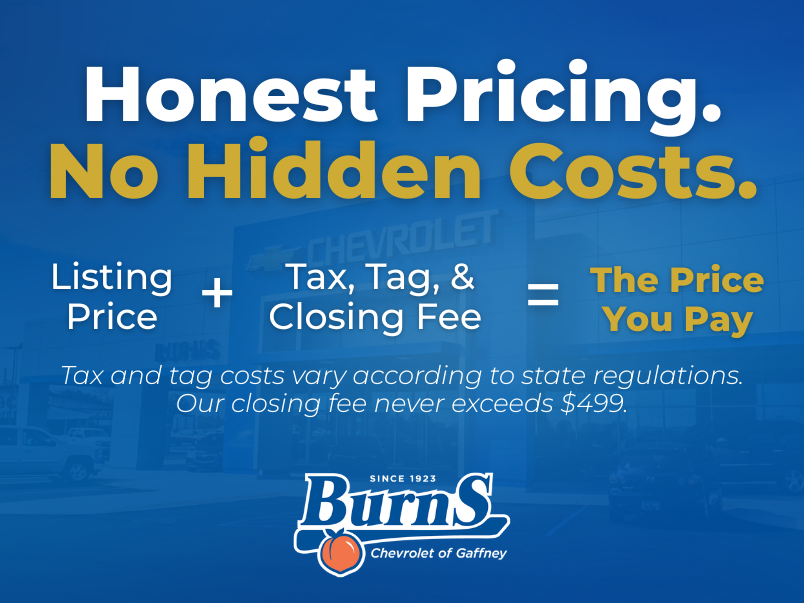
The price our customers pay always follows the same equation: Advertised price + tax, tag, and closing. “Tax, tag and closing” means applicable taxes, tag price from the Department of Motor Vehicles, and our closing fee ($499).
Negotiation is also straightforward because we don’t hide fees or inflate prices. That means discussions focus on finding terms that work for everyone, not arguing over unnecessary add-ons.
Our family has more than a century of experience in the car business, and we’ve built our reputation in the Carolinas on transparency, fairness, and customer-first service.
Shop Smart, Shop Transparent
You shouldn’t have to be skeptical about the price you’re getting on a used car. With the right tools, knowledge, and dealership, you can drive away confident that you got a fair price.
At Burns Chevrolet of Gaffney, we believe in honest, transparent pricing with no addendums. That’s why customers from the Upstate of South Carolina and Charlotte area continue to trust us with their car purchases.When you’re ready to find your next used vehicle, we’ll be here to help you get the best value — with no surprises.